“Control Pain, Heal Better, Recover Faster.”
What is Cryo (Cold) Therapy?
Cold therapy involves applying cold substances such as ice packs, cold compresses, or chilled gels to the affected area. The low temperature helps slow down blood flow and numb the tissues, providing immediate relief.
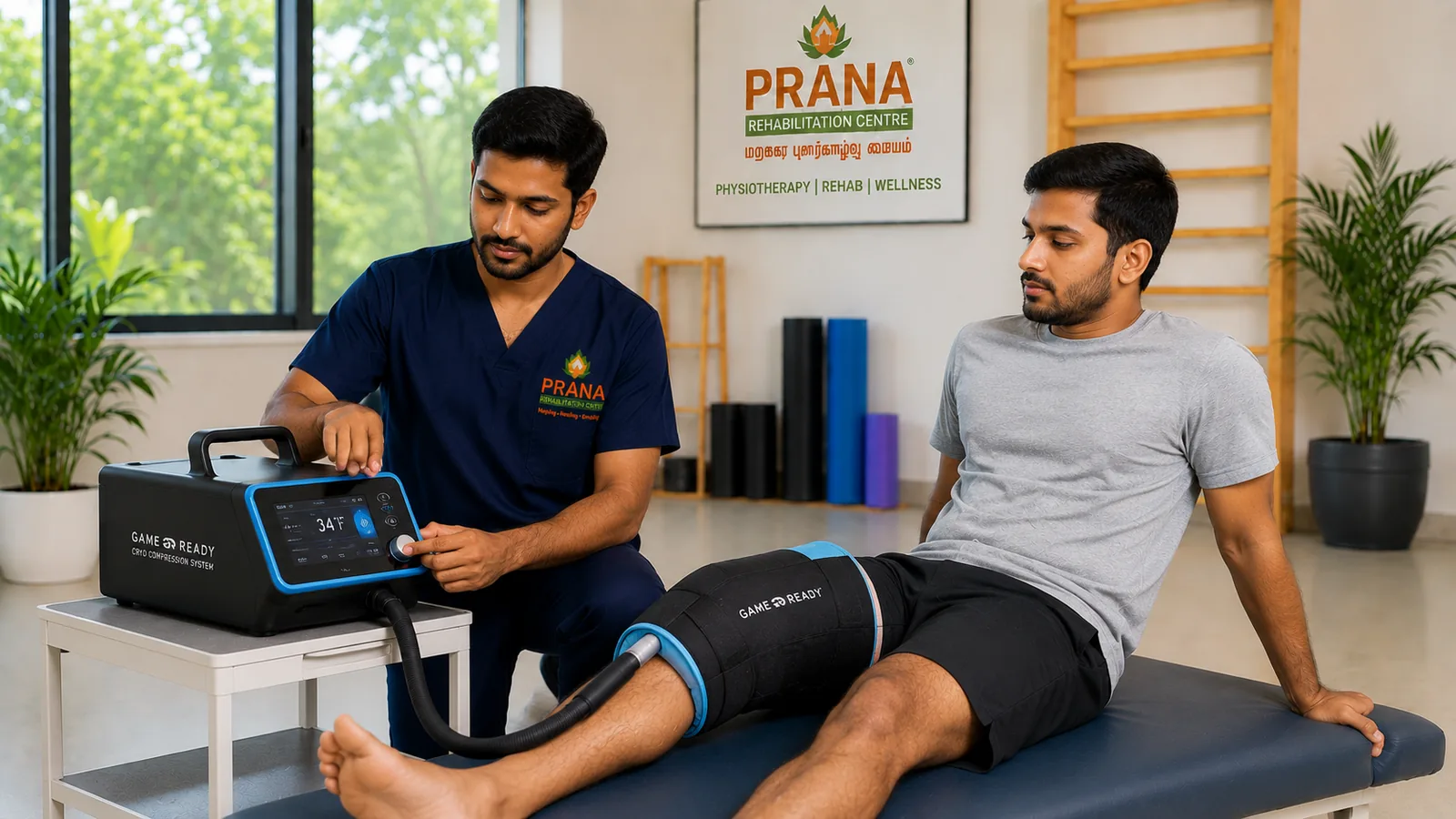
Cryo Compression Therapy is an advanced physiotherapy modality performed using specialized equipment that combines controlled cold therapy (cryotherapy) with intermittent pneumatic compression to effectively manage pain, inflammation, and swelling in musculoskeletal and post-surgical conditions.
At Prana Rehabilitation Centre, it is widely used as an early-stage intervention to enhance recovery, reduce complications, and support a faster return to normal function. These systems offer greater accuracy, consistency, and effectiveness compared to traditional methods.
Physiological Principles of Cryo Compression Therapy
Cryo Compression Therapy works through two primary physiological mechanisms:
1. Cryotherapy (Cold Application)
Cold therapy produces several therapeutic effects on the body:
• Vasoconstriction – Reduces blood flow to the injured area, limiting swelling and fluid accumulation
• Reduced nerve conduction – Slows pain signals, providing effective pain relief
• Decreased metabolic activity – Lowers oxygen demand of injured tissues, helping prevent secondary tissue damage
• Anti-inflammatory effect – Helps control the inflammatory response during the acute phase
• Muscle relaxation – Reduces muscle spasms and tightness around the affected area
2. Intermittent Compression Therapy
Compression therapy provides controlled mechanical pressure that:
• Enhances venous and lymphatic drainage
• Reduces interstitial fluid and edema
• Improves local circulation after each compression cycle
• Assists in the removal of inflammatory waste products
• Promotes oxygen and nutrient delivery to healing tissues
Synergistic Effect of Cryo Compression Therapy
When cold therapy and compression are combined, they produce a powerful synergistic effect, resulting in:
• Faster reduction of swelling and edema
• Significant pain relief within a short duration
• Reduced tissue stiffness and pressure
• Prevention of secondary tissue damage
• Improved joint mobility in the early stages
• Enhanced functional recovery outcomes
This makes it especially effective during the acute and sub-acute phases of rehabilitation.
Clinical Applications
At Prana Rehabilitation Centre, Cryo Compression Therapy is commonly used for the following conditions:
1. Sports Injuries
• Ligament sprains (ankle, knee, wrist)
• Muscle strains (hamstring, quadriceps, calf)
• Soft tissue contusions (bruises)
• Post-exercise muscle soreness and fatigue
2. Post-Operative Rehabilitation
• ACL reconstruction surgery
• Total knee and hip replacement
• Shoulder rotator cuff repair
• Arthroscopic procedures
• Ligament reconstruction surgeries
Benefits in Post-Surgical Cases:
• Reduces post-operative swelling
• Provides effective pain control
• Supports early physiotherapy and mobilization
3. Chronic Musculoskeletal Conditions
• Tendinitis (Achilles, patellar, shoulder)
• Bursitis (shoulder, hip, elbow)
• Osteoarthritis (knee, hip, shoulder)
• Recurrent inflammatory conditions
4. Acute Injury Management
• Immediate injury care supporting the RICE protocol
• Swelling control after falls or trauma
• Early pain and inflammation management
Therapeutic Benefits of Cryo Compression Therapy
• Rapid pain reduction
• Effective control of swelling and inflammation
• Improved joint range of motion
• Faster tissue healing and recovery
• Early initiation of physiotherapy exercises
• Reduced need for pain medications
• Better patient comfort and compliance
• Shortened rehabilitation duration
At Prana Rehabilitation Centre, Cryo Compression Therapy is an important component of evidence-based rehabilitation programs. It is primarily used in the early phase of recovery to:
• Control pain
• Prepare patients for active rehabilitation
• Enable early movement and functional training
• Prevent complications such as stiffness and chronic swelling
Each treatment plan is customized according to the patient’s condition, severity of injury, and stage of recovery. It is an essential part of modern physiotherapy practice, helping patients achieve faster recovery, improved function, and an early return to independent daily activities.
“Bringing Relief Today for a Stronger Tomorrow.”