Spasticity is a neurological condition where muscles become abnormally tight and resistant to movement due to disrupted communication between the brain and the body. It is commonly seen after stroke, brain injury, spinal cord injury, and other neurological conditions. Over time, this stiffness can start interfering with walking, hand use, posture control, balance, and even basic daily activities like standing up, turning in bed, or reaching for objects. What makes it more complex is that the tightness often fluctuates and gradually leads to reduced mobility and independence if not addressed early.
At Prana, spasticity is viewed not just as muscle tightness but as a neurological movement control imbalance. Our Integrated Rehabilitation approach combines physiotherapy, clinical neurological care, psychological support, and naturopathy-based methods to improve movement quality and help patients regain functional independence in a structured manner.
How Spasticity Develops and Affects Movement
Spasticity occurs when the brain or spinal cord pathways responsible for movement control are damaged. This leads to an imbalance where some muscles remain overactive and tight while others become weak and underused. Over time, this imbalance affects coordination, posture, and smoothness of movement.
A detailed neurological and functional assessment helps understand:
- Muscle tone distribution
- Reflex activity patterns
- Movement limitations
- Functional challenges in daily life
This becomes the base for planning a safe and structured rehabilitation journey.
Improving Movement Quality and Functional Control
Rehabilitation at Prana focuses on improving how the body performs movement rather than only addressing stiffness. Through guided neuro-rehabilitation and physiotherapy-based techniques, the body is gradually trained to regain better control over affected muscles.
With consistent training, patients begin to experience:
- Smoother and more coordinated movement
- Better control during walking and standing
- Improved ability to use affected limbs
- Reduction in abnormal movement patterns
The process is gradual, allowing the nervous system time to adapt and relearn functional movement.
Daily Function, Posture, and Activity Adaptation
Spasticity often changes how a person naturally moves and maintains posture. This can make daily activities more effortful and tiring. Rehabilitation helps in re-establishing practical movement patterns that support independence in real-life situations.
Support is given for:
- Walking with improved balance and stability
- Better posture in sitting and standing positions
- Functional use of hands and limbs in daily tasks
- Safe transitions like sitting to standing or turning in bed
- Improving coordination during routine activities
These changes help patients gradually return to more independent living.
Emotional Strength and Recovery Consistency
Living with spasticity can be emotionally challenging due to physical limitations, dependency, or slow recovery progress. Many patients experience frustration, reduced confidence, or hesitation in movement.
Psychological support becomes an important part of rehabilitation by helping patients:
- Stay motivated throughout recovery
- Manage frustration and emotional stress
- Build confidence in movement again
- Maintain consistency in therapy participation
When emotional stability improves, physical rehabilitation becomes more effective and consistent.
Alongside this, supportive naturopathy-based methods are used where appropriate, including breathing practices, relaxation techniques, gentle mobility work, and other holistic approaches that help improve comfort and overall nervous system balance.
What We Offer at Prana in Spasticity Rehabilitation
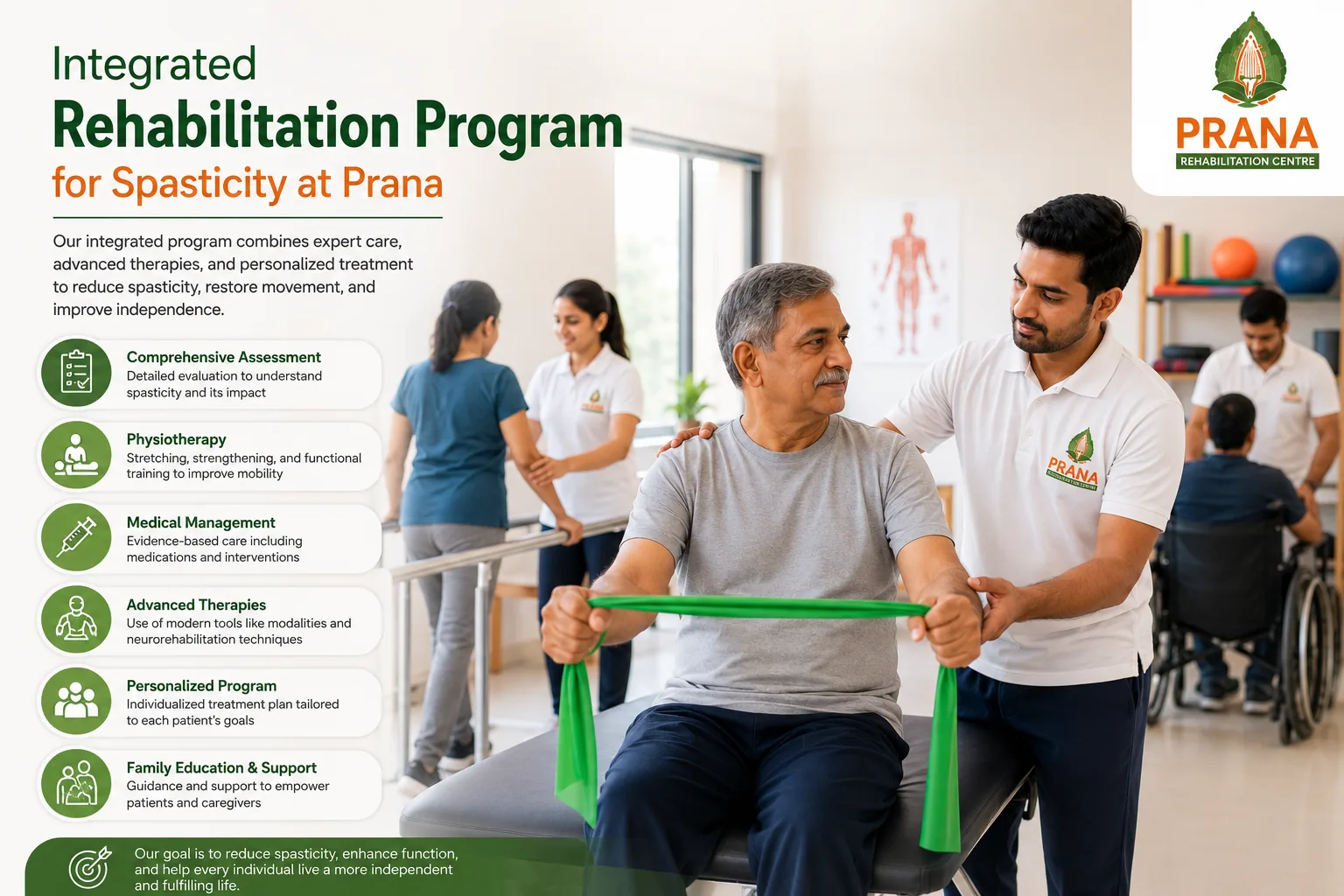
- Comprehensive neurological and functional assessment
- Physiotherapy-based neuro-rehabilitation programs
- Muscle tone and movement control training
- Balance, gait, and coordination improvement support
- Psychological counselling for emotional stability and motivation
- Naturopathy-based supportive care (breathing, relaxation, gentle movement support)
- Functional independence training for daily activities
- Long-term movement improvement and complication prevention strategies
With consistent rehabilitation, patients often notice gradual improvements in movement smoothness, posture control, balance, and independence in daily activities. The progress may take time, but it becomes more stable as the nervous system slowly adapts and relearns movement control.
At Prana, the journey is about moving from stiffness to smoother control, and from limitation to confident, independent movement in daily life.