"Your path to pain-free living starts"
What is Interferential Therapy?
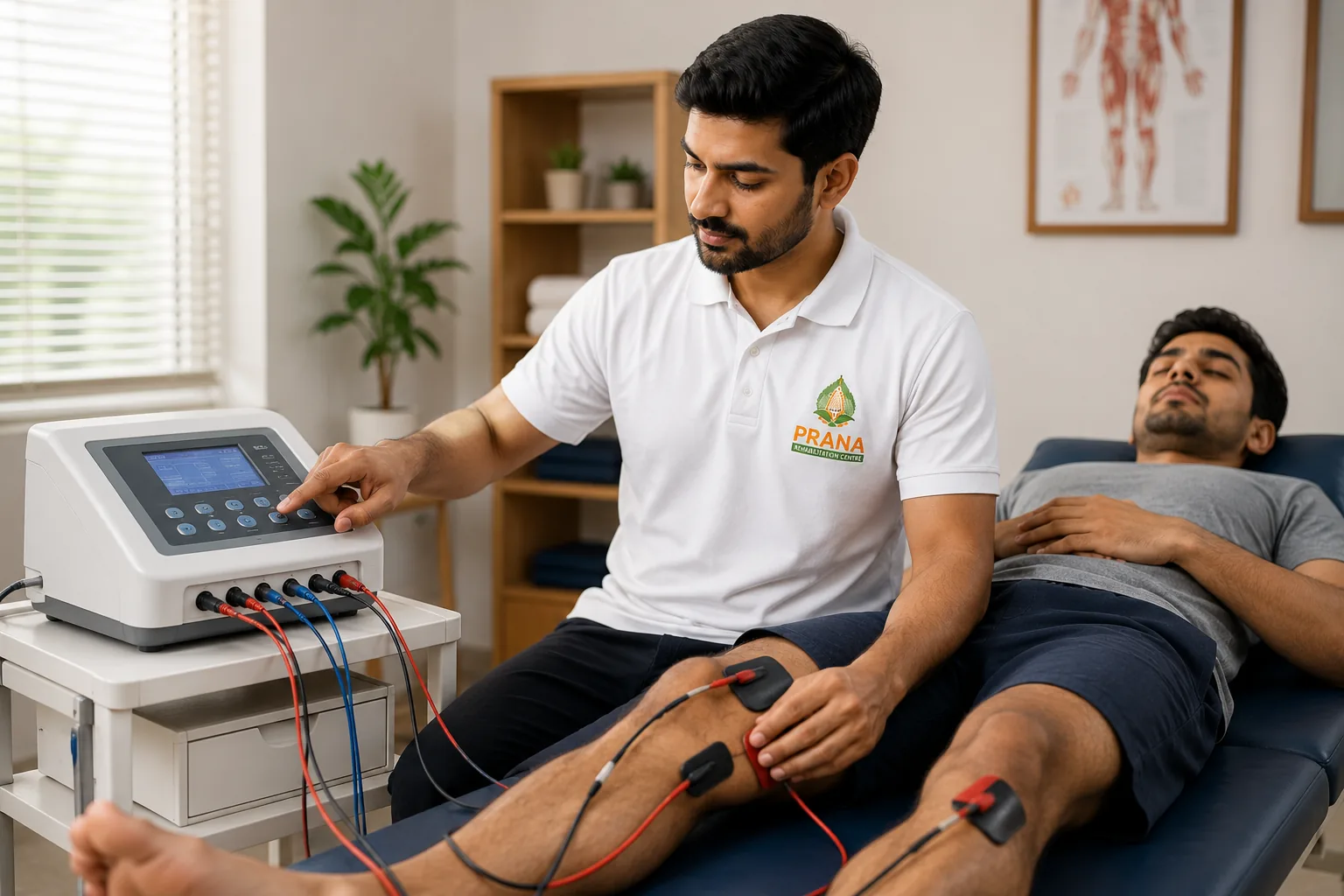
Interferential Therapy (IFT) is a form of electrotherapy that uses controlled electrical currents to stimulate muscles and nerves in a targeted area of the body. It stimulation deep inside the affected region comfortable. They treat pain, accelerate tissue healing, and improve functional mobility. The therapy operates by applying two medium-frequency alternating currents through the skin via electrodes. These currents intersect within the body tissues, producing an "interference" effect that generates a low-frequency current at the targeted site. This low-frequency stimulation penetrates deeper structures without causing significant skin discomfort, which is a key advantage over other electrotherapy techniques.
Our Prana Rehabilitation Centres Provide
At Prana Rehabilitation Centre, Interferential Therapy is an integral part of a comprehensive rehabilitation program. The centre focuses on delivering personalized care using advanced therapeutic techniques to ensure effective and safe recovery. Experienced physiotherapists assess each patient's condition and tailor the treatment to achieve the best possible outcomes. Whether you are recovering from an injury, managing chronic pain, or seeking post-surgical rehabilitation, Prana Rehabilitation Centre provides a supportive environment designed to help you regain strength, mobility, and overall well-being.
In a rehabilitation setting, IFT is administered using a specialized electrotherapy unit. The patient is positioned comfortably either lying down or sitting depending on the area being treated. The skin is cleaned to reduce resistance, and conductive gel or pre-gelled electrodes are applied to ensure effective transmission of electrical currents. Typically, four electrodes are placed around the affected area so that the currents intersect precisely at the site of pain or injury. In some cases, a bipolar setup may be used for smaller treatment areas.
The physiotherapist carefully selects treatment based on the patient's condition. These include:
Intensity (amplitude)Adjusted to a strong but comfortable tingling sensation
DurationUsually ranges from 10 to 20 minutes per session
Continuous monitoring ensures patient safety and optimal therapeutic effect throughout the session.
How Does IFT Work?
IFT works through multiple therapeutic mechanisms that support recovery and pain management:
Pain Reduction
The electrical stimulation interferes with pain signals traveling to the brain, reducing the perception of pain.
Enhanced Blood Flow
Improves microcirculation, allowing better delivery of oxygen and nutrients to injured tissues.
Muscle Relaxation
Deep stimulation helps release muscle tension, reducing stiffness and spasms.
Edema Reduction
By promoting lymphatic drainage, IFT helps reduce swelling caused by injuries or inflammation.
Physiological Effects and Mechanism
IFT produces several therapeutic effects within the body:
- Pain Modulation: It works through mechanisms such as the Gate Control Theory, where electrical stimulation blocks pain signals from reaching the brain, and by promoting the release of endorphins, the body's natural painkillers.
- Improved Blood Circulation: The stimulation enhances vasodilation and microcirculation, increasing oxygen supply and nutrient delivery to damaged tissues.
- Muscle Relaxation and Stimulation: It reduces muscle spasms, relieves tightness, and can also stimulate weak or inhibited muscles.
- Edema Reduction: By improving lymphatic drainage and venous return, IFT helps reduce swelling and inflammation.
- Tissue Healing: Increased circulation and cellular activity contribute to faster repair of injured tissues.
Indications in Rehabilitation Practice
IFT is integrated into rehabilitation programs for a wide range of conditions, including:
Musculoskeletal disorders such as low back pain, cervical pain, and shoulder dysfunction
Sports injuries like ligament sprains, muscle strains, and delayed onset muscle soreness
Post-operative rehabilitation to control pain and swelling
Chronic conditions such as arthritis, fibromyalgia, and neuropathic pain syndromes
Neuromuscular conditions where muscle re-education is required
Advantages in Rehab Settings
IFT is highly preferred in rehabilitation centers due to its:
Non-invasive and painless nature
Ability to target deep tissues effectively
Flexibility and customization based on patient needs
Compatibility with other therapies such as exercise, manual therapy, and heat/cold modalities
Interferential Therapy is a highly effective and well-established electrotherapy technique for managing pain, improving circulation, reducing muscle stiffness, and supporting tissue healing. Its non-invasive nature and adaptability make it a valuable part of modern physiotherapy and rehabilitation care.
A quality, patient-centred Interferential Therapy and comprehensive rehabilitation services, ensuring safe treatment, personalized care, and effective recovery outcomes for every individual.