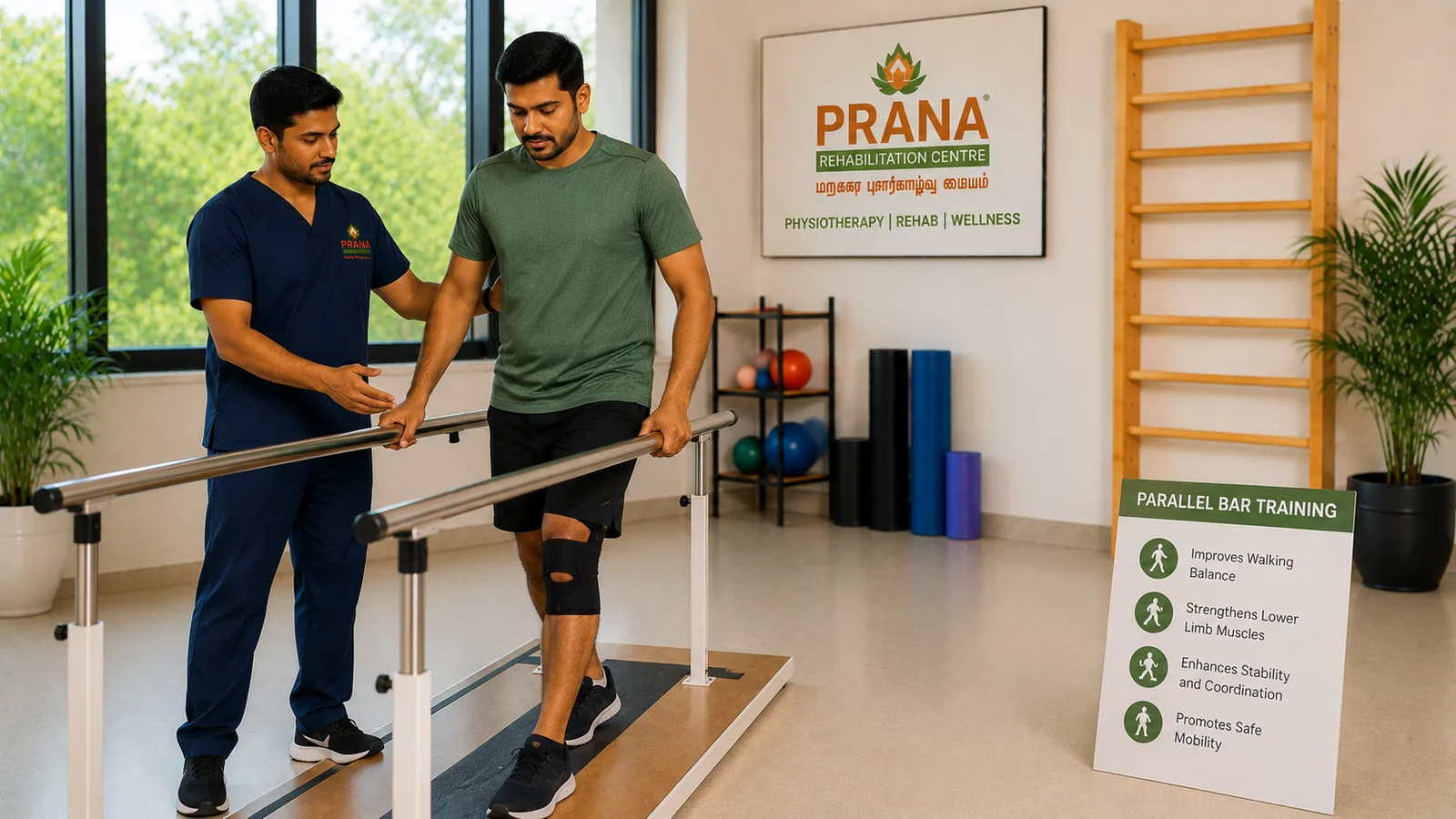
“Supporting Every Step of Recovery.”
What is Parallel Bar Training?
Parallel bar training is a structured rehabilitation technique designed to help patients regain independence in standing, walking, and functional movement. Using two sturdy, height-adjustable bars, this method creates a safe and supportive environment where patients can rebuild strength, balance, coordination, and confidence step by step.
At Prana Rehabilitation Centre, parallel bar training is an important part of rehabilitation programs for individuals recovering from neurological conditions, injuries, surgeries, and mobility limitations.
Why is Parallel Bar Training Essential?
After neurological conditions, injuries, or surgeries, many patients experience difficulty with balance, coordination, posture, and weight-bearing activities. Parallel bars act as a controlled support system, allowing individuals to practice movements safely while minimizing the risk of falls.
At Prana Rehabilitation Centre, this training is not just about walking — it is a structured progression toward restoring natural movement patterns and functional independence.
Parallel bar training follows a systematic rehabilitation protocol that ensures safe, measurable, and goal-oriented recovery for every patient.
Uses of Parallel Bar Training
• Gait Training
Patients recovering from stroke, spinal cord injury, or surgeries such as knee or hip replacement can relearn walking in a controlled and supportive environment.
• Strengthening Exercises
Exercises such as supported squats, heel raises, leg lifts, and standing activities help strengthen the legs, hips, and core muscles.
• Balance and Coordination Training
Parallel bars help improve equilibrium, stability, and movement control, especially in elderly individuals and patients with neurological conditions.
• Neurological Rehabilitation
Through repetitive and guided movements, therapists help retrain the brain and body. This process, known as neuroplasticity, plays a vital role in restoring functional movement.
Why Choose Prana Rehabilitation Centre?
At Prana Rehabilitation Centre, therapy is tailored according to each patient’s condition, physical abilities, and stage of recovery. With expert guidance, advanced rehabilitation equipment, and a strong focus on safety, patients receive the support they need to progress confidently.
Parallel bar training is integrated into personalized rehabilitation programs to ensure optimal recovery outcomes.
Our Rehabilitation Approach
1. Initial Assessment & Goal Setting
Each rehabilitation program begins with a detailed evaluation of:
• Muscle strength and joint mobility
• Balance and postural control
• Neurological function and coordination
• Level of assistance required
Based on the assessment, therapists design individualized short-term and long-term rehabilitation goals.
2. Supported Standing & Weight-Bearing Training
The initial phase focuses on helping patients adapt to upright posture and standing activities.
This includes:
• Assisted standing with therapist support
• Equal weight distribution on both legs
• Gradual improvement in standing tolerance
• Postural alignment correction
This stage builds the foundation for functional movement and mobility.
3. Gait Training (Walking Re-Education)
Patients gradually begin relearning how to walk within a safe and controlled environment.
Training includes:
• Step-by-step walking within the bars
• Proper foot placement and stride training
• Weight shifting from one leg to another
This phase is especially beneficial for patients recovering from stroke, spinal cord injury, or joint replacement surgeries.
4. Strengthening & Functional Exercises
Once stability improves, targeted strengthening exercises are introduced, including:
• Supported squats and mini-squats
• Heel raises and toe raises
• Leg lifts and marching in place
• Sit-to-stand transitions
These exercises strengthen the lower limbs, hips, and core muscles while improving functional mobility.
5. Balance & Coordination Training
To reduce fall risk and improve movement control, patients undergo:
• Static balance training
• Dynamic balance exercises
• Single-leg support activities
• Coordination drills for smoother movement
6. Neuromuscular Re-Education
Through repetitive and guided movement practice, therapists help retrain communication between the brain and muscles. This process improves motor control and supports functional recovery.
7. Progression to Independent Mobility
As patients gain strength and confidence, therapy progresses toward independent standing and walking activities.
This phase focuses on:
• Improving walking patterns
• Enhancing movement control
• Building confidence during mobility tasks
• Encouraging functional independence
Key Benefits of Parallel Bar Training
• Promotes safe and effective gait training
• Improves walking ability and movement patterns
• Enhances posture, balance, and coordination
• Strengthens lower limb and core muscles
• Builds confidence during movement activities
• Reduces the risk of falls and re-injury
• Supports neurological recovery and motor relearning
• Encourages safe and independent mobility
Integration with Suspension Therapy
At Prana Rehabilitation Centre, parallel bar training is often combined with suspension therapy for enhanced rehabilitation outcomes.
While suspension therapy reduces gravitational strain and assists early movement, parallel bar training helps patients translate those improvements into functional weight-bearing activities such as standing, walking, and balance training.
This integrated rehabilitation approach promotes safer recovery, improved mobility, and greater independence in daily life.
“Walk with Support, Move with Confidence.”