“Improving Movement, Independence, and Quality of Life”
What is Parkinson’s Disease?
Parkinson’s disease is a progressive neurological disorder that mainly affects movement and coordination. It develops due to the gradual loss of dopamine-producing cells in the brain. Dopamine is an important chemical that helps control smooth and balanced body movements.
As dopamine levels decrease, individuals may experience difficulties with movement, posture, balance, and daily functioning.
Although many people recognize Parkinson’s disease through tremors, the condition involves much more than shaking. It affects both physical and emotional well-being, creating challenges that can interfere with everyday life.
Common Symptoms of Parkinson’s Disease
Motor Symptoms
• Tremors or shaking of the hands and limbs
• Muscle stiffness and rigidity
• Slowness of movement
• Difficulty with walking and balance
• Poor posture and reduced coordination
Non-Motor Symptoms
• Sleep disturbances
• Fatigue and low energy
• Anxiety and depression
• Memory and concentration difficulties
• Reduced motivation and emotional changes
Over time, these symptoms may make simple daily activities such as walking, dressing, eating, speaking, and moving more difficult. This is why rehabilitation becomes an essential part of Parkinson’s care.
Why is Rehabilitation Important?
Although Parkinson’s disease currently has no cure, rehabilitation helps individuals manage symptoms more effectively and maintain independence for a longer period.
A structured rehabilitation program supports both physical and emotional health while improving overall quality of life.
Goals of Rehabilitation
• Improve movement and flexibility
• Enhance balance and walking ability
• Reduce the risk of falls
• Maintain independence in daily activities
• Improve confidence and emotional well-being
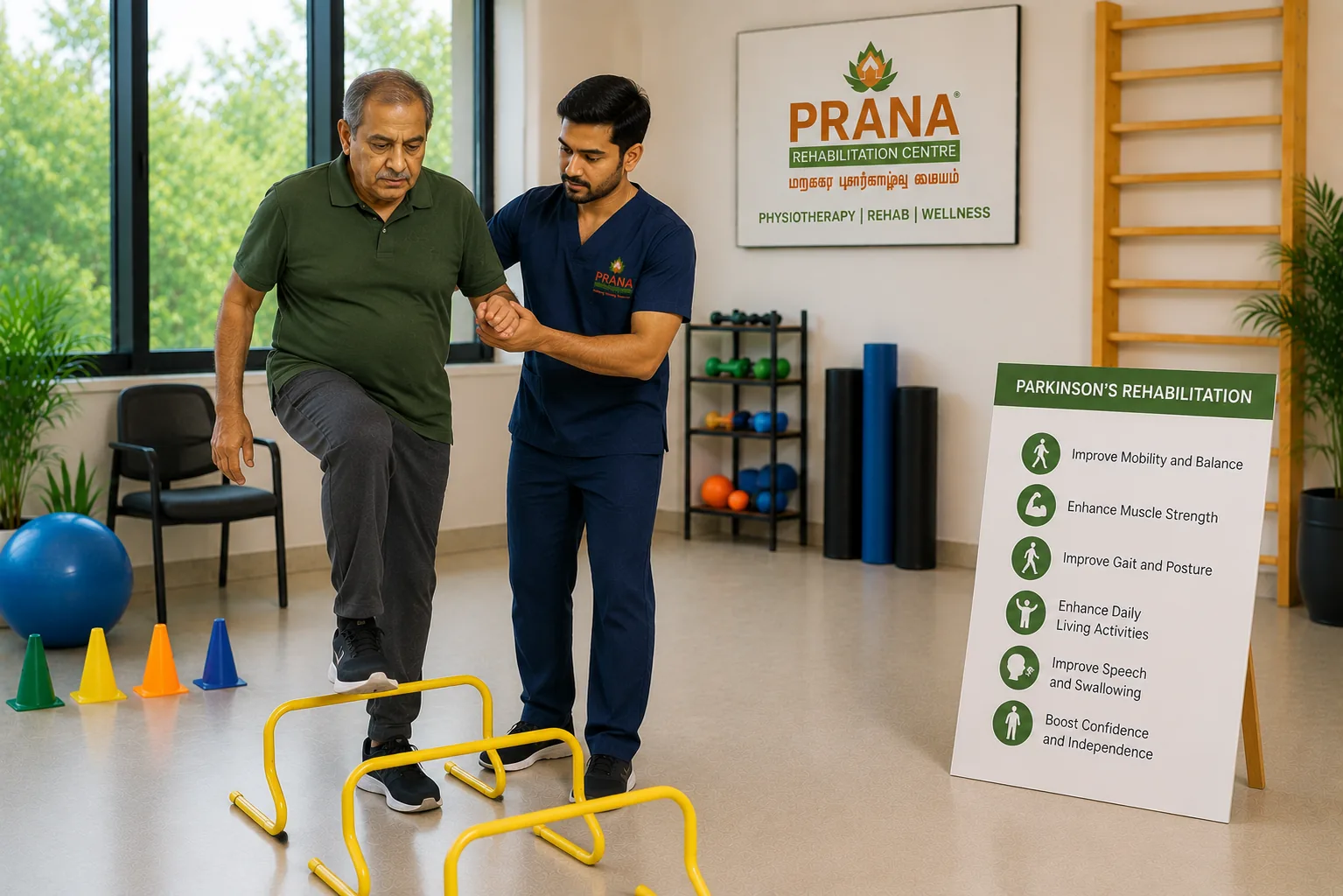
Physiotherapy for Better Movement
Physiotherapy plays a major role in Parkinson’s rehabilitation. It focuses on improving strength, posture, balance, mobility, and coordination through guided exercises and movement training.
Therapy may include:
• Walking and gait training
• Balance and coordination exercises
• Stretching and strengthening routines
• Functional movement practice
Regular physiotherapy helps individuals move more confidently and safely while reducing stiffness and improving flexibility.
Occupational Therapy for Daily Activities
Parkinson’s disease can make routine activities difficult. Occupational therapy helps patients perform everyday tasks more comfortably and independently.
Therapists provide training and techniques for:
• Dressing and grooming
• Eating and writing
• Household activities
• Safe movement at home
Simple adaptations and assistive methods can greatly improve independence and reduce strain during daily tasks.
Speech and Swallow Therapy
Some individuals with Parkinson’s disease experience soft speech, unclear voice, or swallowing difficulties.
Speech therapy focuses on:
• Improving voice strength
• Enhancing speech clarity
• Safe swallowing techniques
This helps patients communicate more effectively and reduces complications related to swallowing difficulties.
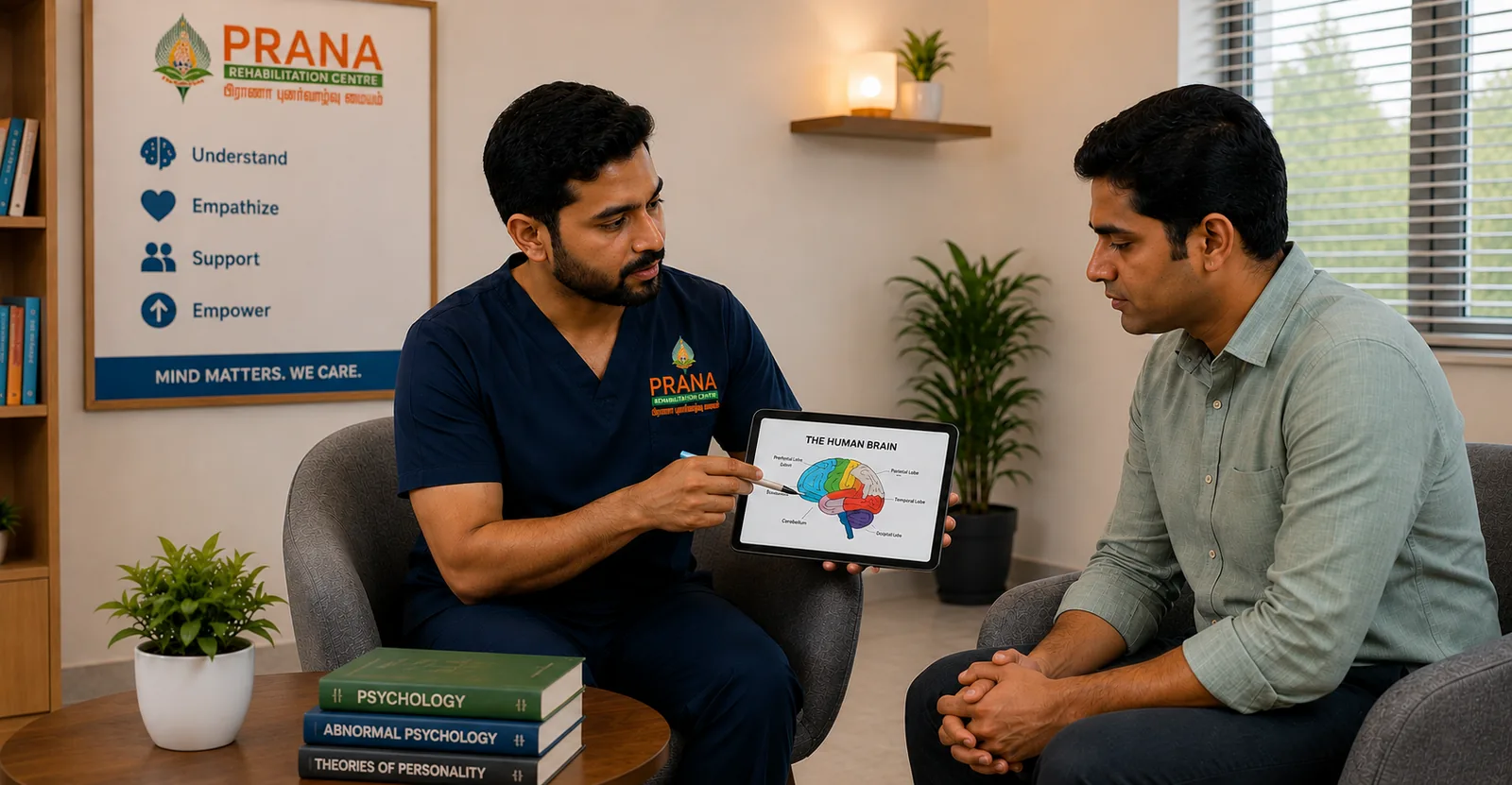
Emotional and Psychological Support
Parkinson’s disease affects not only physical health but also emotional well-being. Feelings of stress, frustration, anxiety, and depression are common.
Psychological support helps patients:
• Manage emotional challenges
• Improve motivation and confidence
• Strengthen coping skills
• Maintain a positive mindset
Mental well-being is an important part of recovery and overall quality of life.
Why Early Therapy Matters
Starting rehabilitation early can make a significant difference in maintaining function and independence.
Consistent therapy helps:
• Slow physical decline
• Improve long-term functional outcomes
• Support active participation in daily life
As Parkinson’s disease progresses, rehabilitation continues to focus on comfort, safety, confidence, and dignity.
The goal is not only symptom management but also helping individuals live more actively, safely, and independently.
At Prana Rehab Centre, care is personalized according to each individual’s needs, abilities, and rehabilitation goals. With continuous guidance, structured therapy, and family support, patients can experience meaningful improvements in movement, confidence, and daily living.
“Complete Care. Continuous Progress. Confident Living.”