We Guide Every Movement
Move better – Live better
Stroke is a sudden onset of neurological impairment caused by a disruption in the brain's blood supply. This interruption leads to damage or death of brain tissue, often resulting in paralysis, weakness, or loss of function. The underlying vascular event may be either ischemic (due to blockage) or haemorrhagic (due to bleeding) in the blood vessels supplying different parts of the brain. Stroke can affect multiple functions, including gross motor skills, perception, behaviour, memory, speech, and language.
Types of Stroke
1. Ischemic Stroke
This is the most common type, accounting for about 80–85% of all strokes. It occurs when blood flow to a part of the brain is reduced or blocked, usually due to a clot. As a result, brain cells are deprived of oxygen and essential nutrients, leading to rapid cell death and potential brain damage within minutes.
2. Haemorrhagic Stroke
This type occurs when a blood vessel in the brain ruptures, causing bleeding in or around the brain. It is classified into:
Intracerebral haemorrhage: Bleeding occurs within the brain tissue itself.
Subarachnoid haemorrhage: Bleeding occurs in the space between the brain and its outer protective covering. Both types of stroke require immediate medical attention to minimize brain damage and improve recovery outcomes.
Our Goals of Stroke Rehab – 4 P's
Prana stroke rehabilitation protocol that includes:
P1 - Protect the Brain
P2 - Promote Neuroplasticity
P3 - Practice Functional Skills
P4 - Prevent Recurrence
P1 – Protect the Brain
In Stroke rehabilitation, "protecting the brain" is the first and most critical step before recovery begins. The brain is highly vulnerable after a stroke, and improper handling can worsen damage or delay recovery. A structured rehabilitation setup focuses on safeguarding brain tissue, preventing secondary injury, and creating the best environment for healing and neuroplasticity.
- Early Medical Stabilization
- Preventing Secondary Brain Injury
- Avoiding joint stiffness and contractures with guided passive movements
- Reducing risk of falls and injuries through assisted transfers and support
- Cognitive and Environmental Protection
- Ensuring proper posture and alignment
- Fall Prevention and Safe Mobility
- Early but Safe Rehabilitation
P2 – Promote Neuroplasticity – Rewiring of Brain
The effects of a stroke can vary widely depending on the area of the brain affected, but they often include weakness or paralysis on one side of the body, difficulty speaking or understanding language, memory problems, and emotional changes such as anxiety or depression. Physical therapy to improve strength, balance, and coordination; occupational therapy to help patients relearn daily activities such as dressing, eating, and bathing; and speech and language therapy to address communication difficulties and swallowing issues.
The brain has an incredible ability to reorganize itself after injury, a concept known as Neuroplasticity. Stroke rehabilitation aims to stimulate this process so that healthy areas of the brain can take over lost functions.
- Repetitive, task-specific training
- Sensory stimulation techniques
- Motor relearning exercises
- Mirror therapy and bilateral activities
- Early and consistent rehabilitation
The goal is to "rewire" the brain through consistent practice, enabling recovery of movement, coordination, and cognitive functions.
P3 – Practice Functional Skills
Recovery is meaningful only when patients regain the ability to perform daily activities. This phase focuses on improving independence in real-life situations.
- Activities of daily living like dressing, eating, and grooming
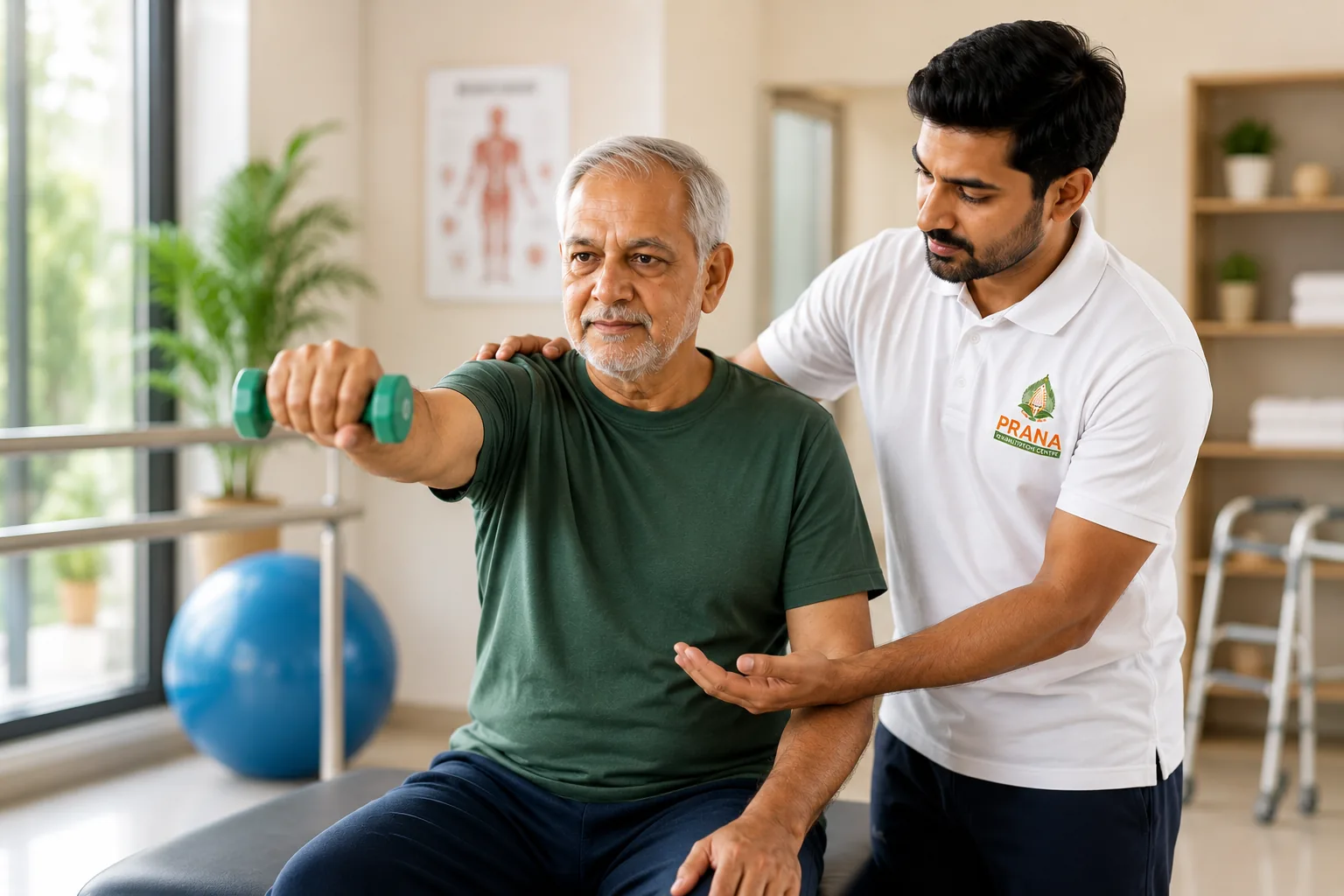
- Gait training and mobility exercises
- Balance and coordination training
- Hand function and fine motor skills
- Task-oriented therapy tailored to patient goals
Each patient demonstrates a unique level of functional ability and recovery potential based on factors such as the severity of the stroke, area of brain involvement, age, overall health, and personal motivation. Therefore, rehabilitation is highly individualized, with therapy plans adapted to match each patient's specific functional capacity, pace of recovery, and personal goals. Rather than isolated exercises, therapy emphasizes purposeful movement, helping patients return to their normal routines and social roles.
P4 – Prevent Recurrence
A second stroke can be more severe and life-threatening. Prevention is a critical component of long-term rehabilitation.
- We will educate the patient regarding Medication adherence, Regular follow-up and monitoring and need to take life-long medication.
- Patient and caregiver education
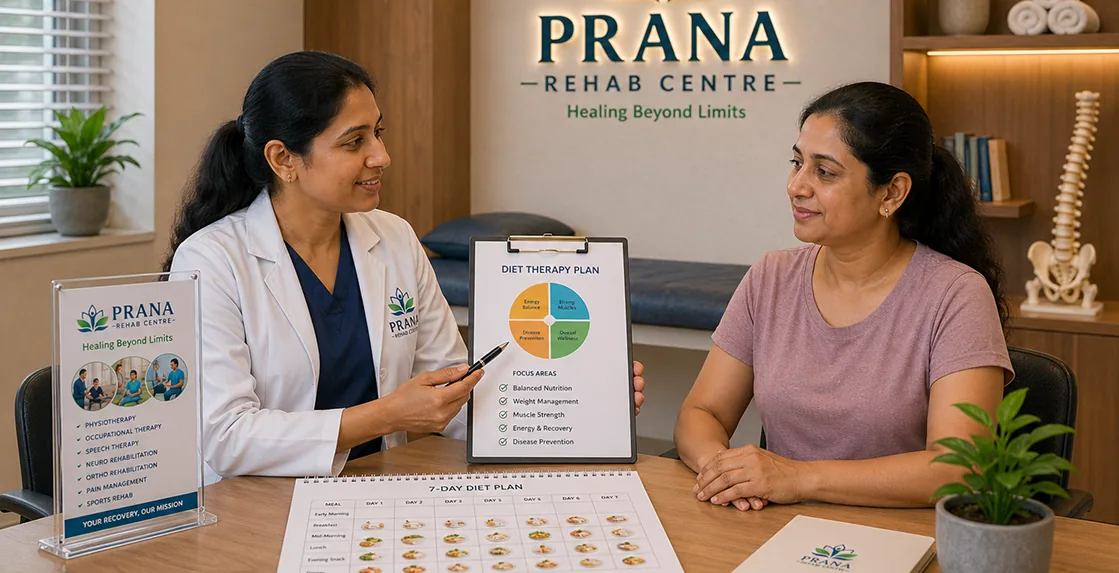
- Lifestyle modification including diet is given by our naturopathy team.
- We will teach Relaxation techniques and meditation.
- Control of risk factors such as Hypertension, Diabetes Mellitus, and cholesterol.
- Post-Stroke stress management is given by our psychology team.
When we treat both body and mind altogether, we can reduce the recurrence of stroke. Prevention ensures that the progress achieved through rehabilitation is sustained over time.
Stroke rehabilitation is often a long-term process that helps individuals recover and regain independence after experiencing a stroke. Rehabilitation typically begins as soon as the patient is medically stable, sometimes within the first 24 to 48 hours, and continues for weeks, months, or even years depending on the severity of the stroke and the individual's progress. With early rehabilitation, consistent therapy, and a strong support system, many stroke survivors are able to make meaningful progress and lead fulfilling lives, demonstrating that recovery is possible even after a life-changing event like a stroke.
Stroke rehabilitation with tools such as Exercise therapy, Electrotherapy, Virtual Reality programs, Mirror therapy and that provide interactive exercises and track progress, making rehabilitation more engaging and accessible. Stroke recovery can still be a challenging and sometimes slow process, requiring patience, perseverance, and realistic goal-setting. Ultimately, stroke rehabilitation is not just about regaining physical abilities but also about rebuilding confidence, adapting to new ways of living, and achieving the highest possible level of independence. Our holistic approach will help the patient not only on the physical plane but also their mental plane.
"Regain Movement, Rediscover Independence"