“Find stillness in every breath
Where breath becomes vital energy”
Pranayama is an ancient yogic practice centered on the conscious regulation of breath. The word comes from Sanskrit prana meaning “vital life force” or “energy,” and ayama meaning “extension” or “control.” Together, pranayama refers to the expansion and control of life energy through breathing techniques. In yogic philosophy, breath is not just a physiological process but a channel for prana—the subtle energy that sustains life. By regulating breath, pranayama aims to balance this energy and harmonize the nervous system, mind, emotional balance and body.
Types of Pranayama
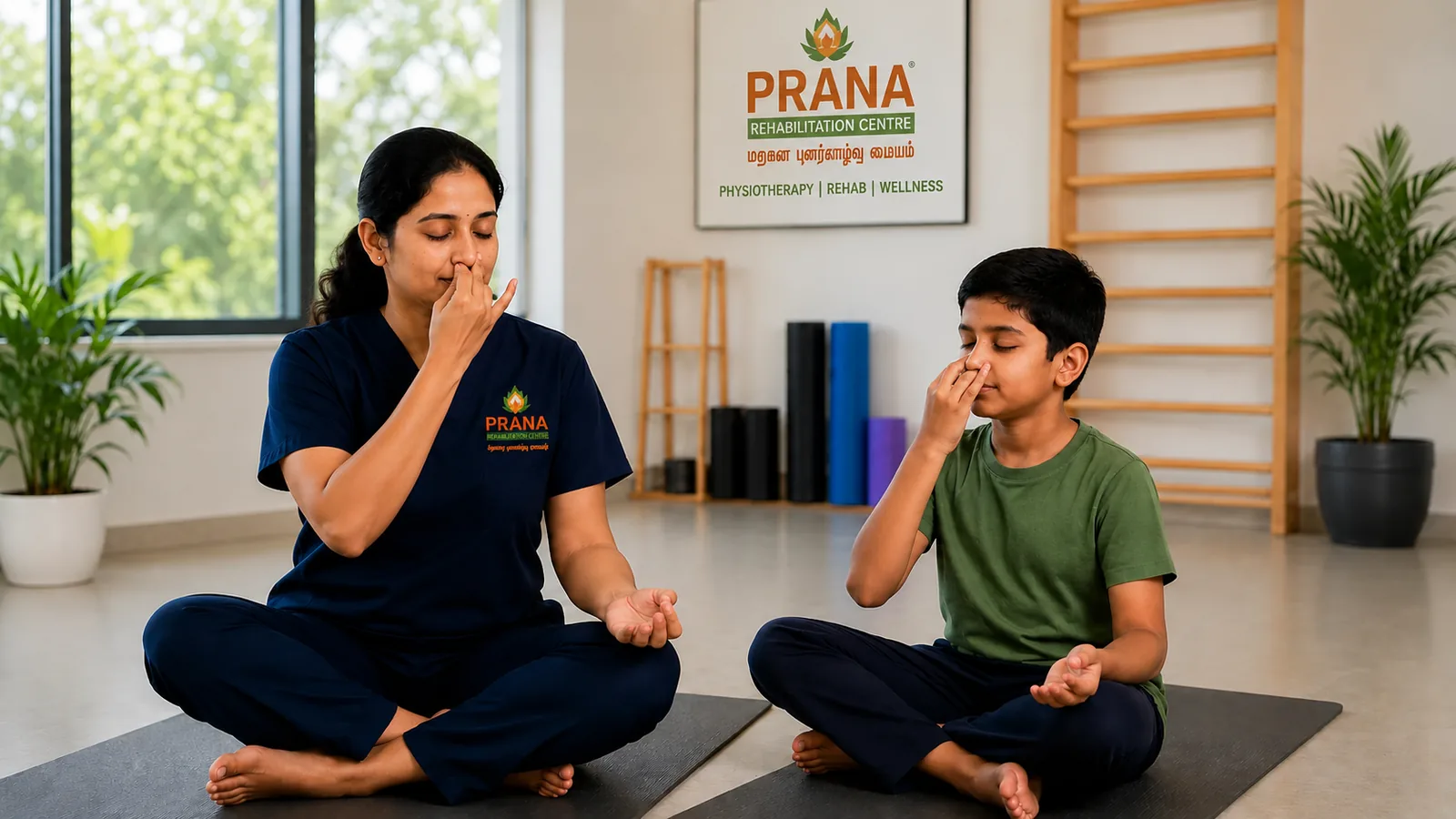
NadiShodhana (Alternate Nostril Breathing)
This technique involves breathing alternately through the left and right nostrils. It is known for balancing the two hemispheres of the brain and purifying energy channels (nadis). It promotes calmness, focus, and emotional stability.
Kapalabhati (Skull Shining Breath)
Is a rapid breathing technique involving forceful exhalations and passive inhalations. It helps cleanse the respiratory system, increase oxygen supply, and energize the body. It is often used for detoxification and mental alertness.
Bhastrika (Bellows Breath)
In this practice, both inhalation and exhalation are forceful and equal. It stimulates the nervous system, increases heat in the body, and boosts energy levels.
Bhramari (Bee Breath)
This technique involves producing a humming sound during exhalation. It has a calming effect on the mind, reduces stress, and improves concentration.
Ujjayi (Victorious Breath)
Often used in yoga asana practice, Ujjayi involves slight constriction of the throat to create an ocean-like sound during breathing. It enhances focus, regulates breath, and builds internal heat.
Mechanism: How Pranayama Works
1. Regulation of the Autonomic Nervous System
One of the primary mechanisms of pranayama is its influence on the autonomic nervous system (ANS), which controls involuntary bodily functions such as heart rate, digestion, and blood pressure.
- Slow and deep breathing practices – parasympathetic nervous system
- Fast and forceful breathing techniques – stimulate the sympathetic nervous system
2. Improvement in Respiratory Efficiency
Pranayama enhances the functioning of the respiratory system by improving the quality and depth of breathing.
- Increased lung expansion and capacity
- Improved oxygen absorption in the alveoli
- More efficient removal of carbon dioxide
As oxygen delivery to the brain and tissues improves, practitioners often experience:
- Greater mental clarity
- Improved concentration and memory
- Reduced physical fatigue
- Enhanced endurance and vitality
3. Effects on Brain Function and Mental State
Pranayama has a direct impact on neurological activity and emotional regulation.
- Increase alpha brain wave activity
- Influence the limbic system
Breath awareness also strengthens the connection between the mind and body, promoting mindfulness and improved self-control.
4. Circulatory and Cardiovascular Benefits
Controlled breathing positively affects cardiovascular functioning through rhythmical changes in breathing and heart activity.
- Improve blood circulation
- Enhance heart rate variability (HRV)
- Reduce cardiovascular strain
5. Yogic and Energetic Perspective
In traditional yogic philosophy, pranayama is not only a breathing exercise but also a method for regulating prana—the vital life force energy.
According to yogic texts:
- The body contains subtle energy pathways known as nadis
- Irregular breathing and mental stress can block the flow of prana
- Pranayama purifies and balances these energy channels
When prana flows freely:
- The mind becomes calmer and more focused
- Physical and mental harmony improves
- Higher states of awareness and meditation become accessible
Benefits of Pranayama
- Improves Lung Capacity and Respiratory Health
- Reduces Stress and Anxiety
- Enhances Mental Clarity and Focus
- Balances the Nervous System
- Boosts Energy Levels
- Supports Heart Health
- Improves Emotional Well-being
- Aids in Detoxification
- Enhances Sleep Quality
- Supports holistic healing
“Pranayama is more than a breathing technique, it is a pathway to physical vitality, mental clarity, and inner balance. Through conscious breath regulation, it supports holistic healing by harmonizing the body, mind, and energy systems. At Prana Rehabilitation Center, we guide individuals in practicing pranayama to promote wellness, emotional stability, and a healthier quality of life.”