“Your Body’s Power to Heal Itself.”
What is PRP Therapy?
PRP (Platelet-Rich Plasma) Therapy is an advanced regenerative treatment widely used in orthopaedic and rehabilitation medicine. It is designed to stimulate the body’s natural healing process and promote the repair of damaged muscles, tendons, ligaments, and joints.
At Prana Rehab Centre, PRP Therapy is an important part of musculoskeletal and sports injury rehabilitation programs. It is a safe, minimally invasive, and biologically natural treatment that uses the patient’s own blood to support healing without the need for surgery.
What is Platelet-Rich Plasma (PRP)?
Platelet-Rich Plasma (PRP) is a concentrated component of blood that contains a high level of platelets, growth factors, and bioactive proteins.
These platelets play an essential role in healing damaged tissues and supporting recovery.
Growth Factors in PRP Help With:
• Tissue repair
• Cell regeneration
• Inflammation control
• Healing of musculoskeletal injuries
The prepared PRP is injected directly into the affected area to activate natural healing mechanisms and reduce pain and inflammation.
How PRP Therapy Works
PRP supports healing through multiple biological mechanisms.
1. Tissue Regeneration
Growth factors in PRP stimulate the repair of:
• Tendons
• Ligaments
• Muscles
• Cartilage
This helps restore the structural integrity of damaged tissues.
2. Anti-Inflammatory Action
PRP helps regulate inflammatory responses by:
• Reducing swelling
• Decreasing joint stiffness
• Relieving chronic pain
3. Collagen Synthesis
PRP promotes collagen production, which:
• Strengthens connective tissues
• Improves joint stability
• Reduces the risk of re-injury
4. Pain Reduction
By enhancing tissue healing and reducing inflammation, PRP indirectly reduces pain and improves function over time.
Conditions Treated with PRP Therapy at Prana Rehab Centre
Tendon Injuries
• Tennis elbow (lateral epicondylitis)
• Achilles tendinopathy
• Rotator cuff injuries
• Patellar tendinitis
Ligament Injuries
• Ligament sprains
• Partial ligament tears
• Sports-related soft tissue injuries
Chronic Musculoskeletal Conditions
• Osteoarthritis (knee, shoulder, hip)
• Plantar fasciitis
• Chronic joint pain and stiffness
Post-Surgical Rehabilitation
PRP Therapy may also help to:
• Enhance tissue healing after orthopaedic surgeries
• Support faster recovery of operated tendons and ligaments
• Reduce post-operative inflammation
PRP Procedure
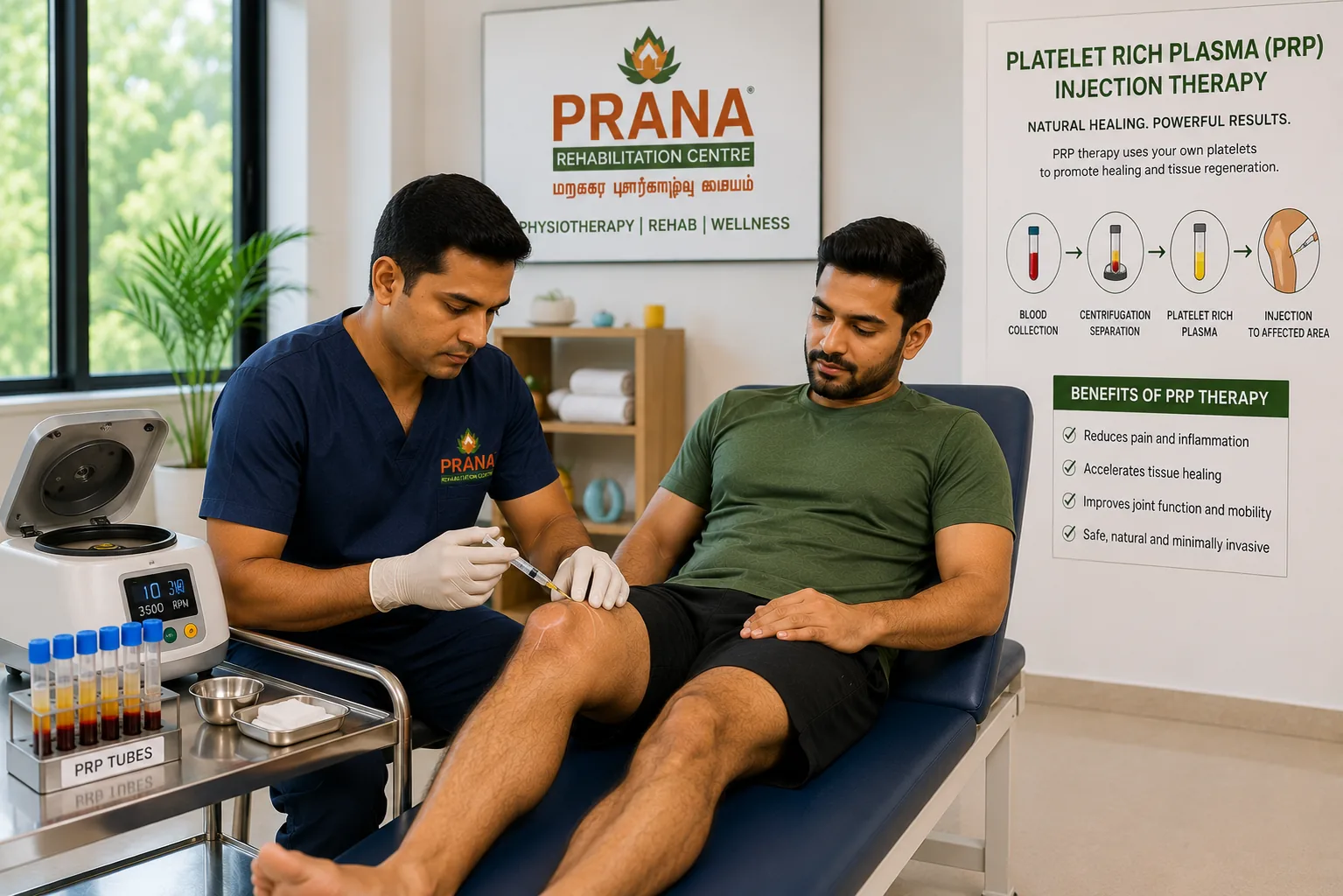
The PRP procedure is simple, safe, and minimally invasive.
Steps Involved
-
A small amount of blood is drawn from the patient’s arm
-
The blood is processed in a centrifuge to separate platelet-rich plasma
-
The concentrated PRP is carefully injected into the affected area
-
Ultrasound guidance may be used for precise targeting
The procedure typically takes 30–60 minutes and is performed on an outpatient basis.
After the procedure, mild pain, swelling, or stiffness may occur temporarily and usually resolves within a few days.
Treatment Protocol
• Most patients may require 2–3 PRP sessions, depending on the condition
• Sessions are usually spaced a few weeks apart
• PRP Therapy is often combined with physiotherapy for the best rehabilitation outcomes
Benefits of PRP Therapy
• Uses the patient’s own blood, making it natural and safe
• Minimally invasive alternative to surgery
• Promotes true tissue healing, not just temporary pain relief
• Reduces long-term dependency on medication
• Improves joint function and mobility
• Supports faster return to activity and sports
• Low risk of allergic or immune reactions
Safety and Precautions
PRP Therapy is generally safe when performed by trained professionals. However, it may not be suitable for everyone.
Contraindications
• Blood disorders or platelet abnormalities
• Active infections
• Severe systemic illness
• Cancer in the treatment area
At Prana Rehab Centre, all PRP treatments are performed under strict clinical assessment and medical supervision to ensure both safety and effectiveness.
Integrated Rehabilitation Approach
At Prana Rehab Centre, PRP Therapy is part of a comprehensive rehabilitation approach that combines:
• Medical evaluation
• Image-guided injections when required
• Physiotherapy rehabilitation
• Functional training programs
The goal is to promote natural healing, restore function, reduce pain, and improve quality of life for individuals with musculoskeletal conditions.
“Encouraging Faster Healing with the Body’s Own Power.”