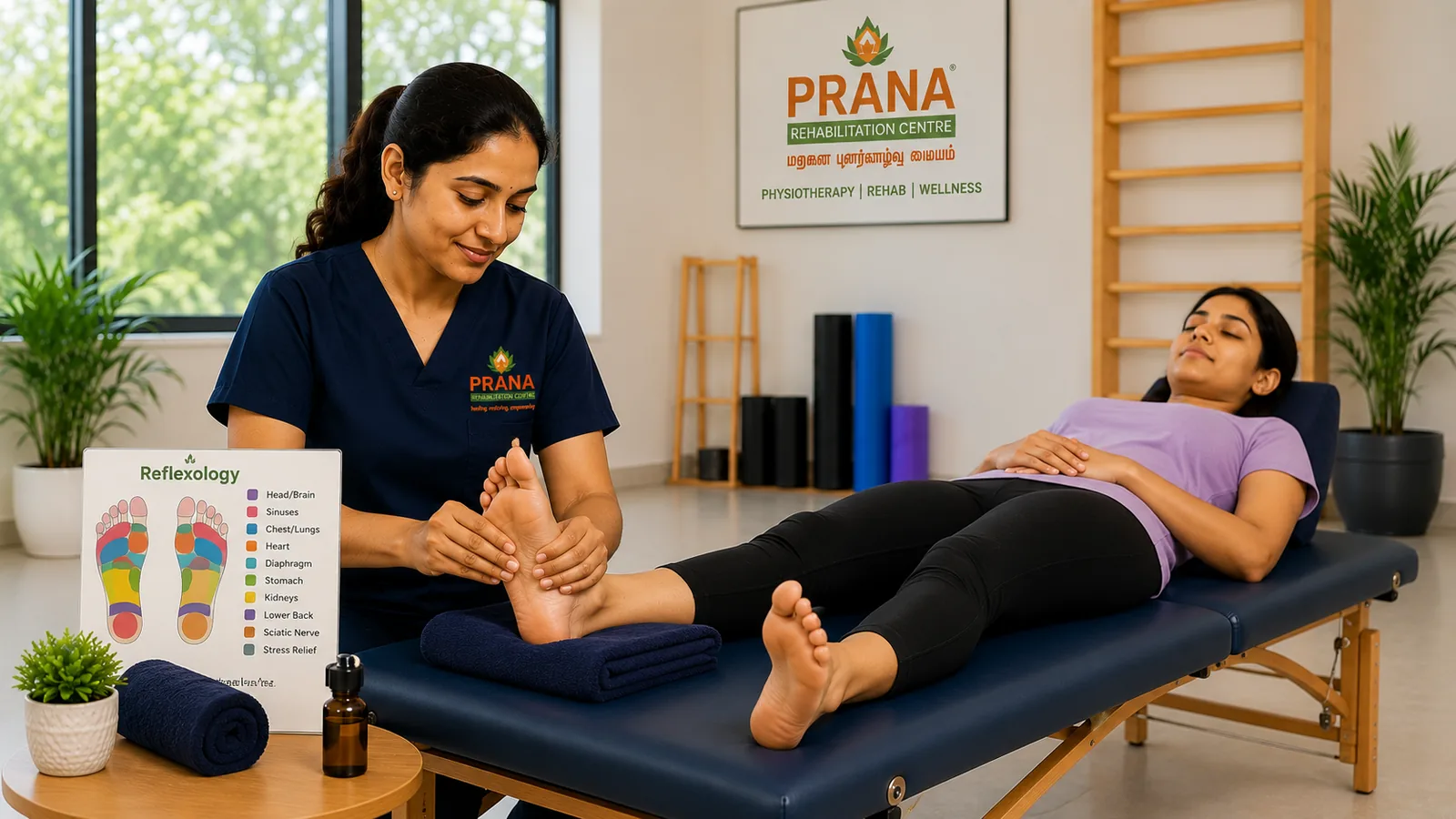
“Healing Through Every Pressure Point.”
Origins of Reflexology
Reflexology is a therapeutic practice in which pressure is applied to specific points on the feet, hands, or ears, known as “reflex points,” that are believed to correspond to different organs and systems of the body. By stimulating these points, reflexology aims to promote relaxation, improve circulation, and support the body’s natural healing processes.
It has roots in ancient healing traditions, including Egyptian, Chinese, and Indian medicine. Historical evidence suggests that similar practices were used thousands of years ago to maintain health and treat ailments naturally. Over time, modern reflexology was developed and systematized, especially in the early 20th century.
Principles of Reflexology
The core principle of reflexology is that the body is interconnected through energy pathways and the nervous system. Each reflex point corresponds to a specific organ or body part. For example, the toes are believed to relate to the head and brain, while the heel corresponds to the lower back and pelvic region. By applying pressure to these points, practitioners aim to remove blockages and restore the free flow of energy, helping the body function more efficiently.
Types of Reflexology
Reflexology is a therapeutic practice based on applying pressure to specific points on the feet, hands, or ears, which are believed to correspond to different organs and systems of the body. There are several types of reflexology, each focusing on different areas:
1. Foot Reflexology
This is the most common form. It involves applying pressure to reflex points on the feet that correspond to various body parts. It is widely used for relaxation, improving circulation, and relieving stress and pain.
2. Hand Reflexology
In this type, pressure is applied to specific points on the hands. It is convenient and can be easily practiced anywhere. It helps in reducing stress, improving focus, and managing mild pain.
3. Ear Reflexology (Auricular Reflexology)
This method focuses on the ear, where points correspond to the entire body. It is often used for pain management, addiction control, and stress relief.
4. Facial Reflexology
This involves stimulating reflex points on the face. It is believed to improve blood circulation, promote relaxation, and enhance skin health.
5. Zone Therapy
This is the foundation of reflexology. The body is divided into 10 vertical zones, and pressure applied to one area affects the corresponding zone throughout the body.
Mechanism Behind Reflexology
Reflexology works by applying pressure to specific reflex points, which stimulates sensory nerve endings in the skin. These signals travel through peripheral nerves to the spinal cord and brain, where they can influence body functions through the nervous system.
It includes improved blood and lymphatic circulation, which enhances oxygen and nutrient delivery to tissues while aiding in the removal of metabolic waste. Reflexology also helps activate the parasympathetic nervous system, leading to reduced stress, slower heart rate, and improved digestion.
Conditions Commonly Addressed
-
Chronic pain (back pain, arthritis)
-
Migraines and tension headaches
-
Stress and anxiety disorders
-
Digestive issues
-
Hormonal imbalances
Contraindications (Avoid Reflexology)
-
Open wounds, cuts, or ulcers on feet or hands
-
Severe infections (fungal, bacterial, or viral) in the treatment area
-
Burns or recent injuries
-
Deep vein thrombosis (DVT) or risk of blood clots
-
Severe circulatory disorders affecting the limbs
Relative Contraindications (Caution)
Reflexology can be done with medical advice or modifications in:
-
Pregnancy – especially during the first trimester or high-risk pregnancy
-
Diabetes – due to reduced sensation (neuropathy) and risk of injury
-
Heart disease – avoid excessive pressure
-
Cancer – only with doctor’s approval
-
Epilepsy – care needed to avoid triggering episodes
-
Recent surgeries – avoid the affected area until healing
“At Prana Rehab Center, reflexology is a gentle holistic therapy that promotes relaxation, improves circulation, and supports the body’s natural healing process. By stimulating specific pressure points, it helps restore balance between the body, mind, and nervous system.”
“Healing begins when the body is relaxed, the mind is calm, and balance is restored.”