“Improving Comfort, Control, and Function”
What is Spasticity?
Spasticity is a neurological condition in which muscles become abnormally stiff, tight, and difficult to control. It occurs due to damage to the upper motor neurons in the central nervous system, affecting the brain’s ability to regulate normal muscle movement.
In spasticity, certain muscles remain continuously contracted, leading to stiffness, tightness, reduced flexibility, and sometimes involuntary muscle spasms.
A key feature of spasticity is that it is velocity-dependent, meaning the faster a muscle is stretched, the more resistance it produces. This increased muscle tone can interfere with normal movement, posture, balance, and coordination.
Over time, spasticity may significantly affect a person’s ability to perform daily activities independently.
Conditions Commonly Associated with Spasticity
Spasticity commonly occurs in neurological conditions such as:
• Stroke
• Cerebral palsy
• Multiple sclerosis
• Spinal cord injury
• Traumatic brain injury
The severity of spasticity varies from person to person. Some individuals may experience mild stiffness, while others may develop severe muscle tightness that limits movement and causes discomfort.
Common Symptoms of Spasticity
Individuals with spasticity may experience:
• Increased muscle stiffness (hypertonia)
• Exaggerated tendon reflexes (hyperreflexia)
• Muscle spasms or involuntary contractions
• Resistance to passive movement
• Difficulty walking or maintaining balance
• Abnormal posture or limb positioning
• Pain and reduced joint mobility
If not managed properly, spasticity can lead to muscle shortening, joint contractures, poor posture, and reduced functional ability.
Early intervention and rehabilitation are important to prevent complications and maintain mobility.
Importance of Comprehensive Assessment
Effective spasticity management begins with a detailed clinical assessment.
At Prana Rehabilitation Centre, we carefully evaluate:
• Affected muscle groups
• Severity of muscle stiffness and muscle tone
• Joint flexibility and movement
• Impact on posture, balance, and walking
• Difficulties in daily activities and functional tasks
This assessment helps our rehabilitation team design a personalized treatment plan based on the individual’s physical limitations, functional goals, and recovery needs.
The primary aim of treatment is to reduce muscle tightness, improve flexibility, restore controlled movement, and enhance overall independence.
Rehabilitation Approaches for Spasticity
• Stretching Techniques
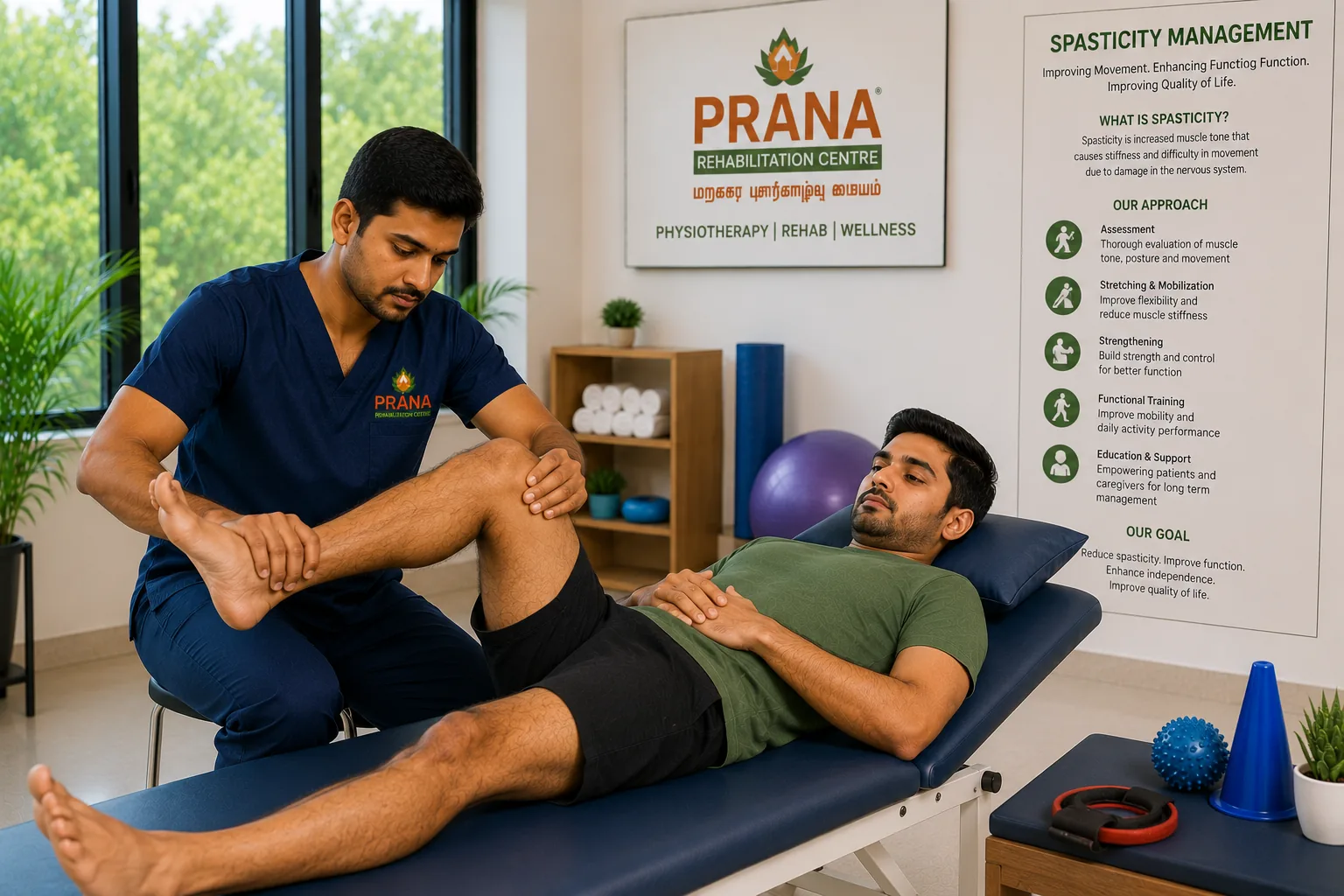
Slow and sustained stretching exercises help reduce muscle tone, maintain muscle length, and prevent contractures. Regular stretching also improves comfort and flexibility.
• Range of Motion Exercises
Passive and active joint movement exercises help maintain mobility, reduce stiffness, and improve circulation in affected muscles.
• Strengthening Exercises
Strengthening weaker muscles, especially opposing muscle groups, improves balance, posture, and movement control.
• Weight-Bearing Activities
Supported standing and weight-bearing exercises help normalize muscle tone, improve stability, and encourage functional movement patterns.
• Functional Training
Task-based activities such as sitting, standing, walking, reaching, and grasping promote more natural movement and improve independence in daily life.
Advanced Rehabilitation Techniques
At Prana Rehab Centre, advanced rehabilitation methods are incorporated to improve functional recovery and movement control.
• Functional Electrical Stimulation (FES)
FES uses controlled electrical impulses to activate muscles, improve movement patterns, and reduce spasticity.
• Task-Oriented Training
Repetitive practice of functional activities helps retrain the nervous system and improve coordination.
• Virtual Reality and Interactive Therapy
Interactive therapy programs encourage patient participation while improving balance, coordination, and motor function in an engaging way.
Supportive Therapies
• Positioning Techniques
Proper positioning during sitting, standing, and lying helps reduce abnormal muscle activity and prevents complications such as pressure sores and deformities.
• Splinting and Orthoses
Devices such as hand splints and ankle-foot orthoses (AFOs) help maintain proper alignment, prevent deformities, and support movement.
Medical Management
Along with rehabilitation therapy, medical treatments may also help control spasticity. These include:
• Oral medications to reduce muscle overactivity
• Botulinum toxin injections for targeted muscle relaxation
• Intrathecal baclofen therapy for severe generalized spasticity
At Prana Rehabilitation Centre, our spasticity management program focuses on improving comfort, movement control, mobility, and functional independence through personalized care and advanced rehabilitation approaches.
“Empowering Recovery Through Better Movement, Control, and Independence.”