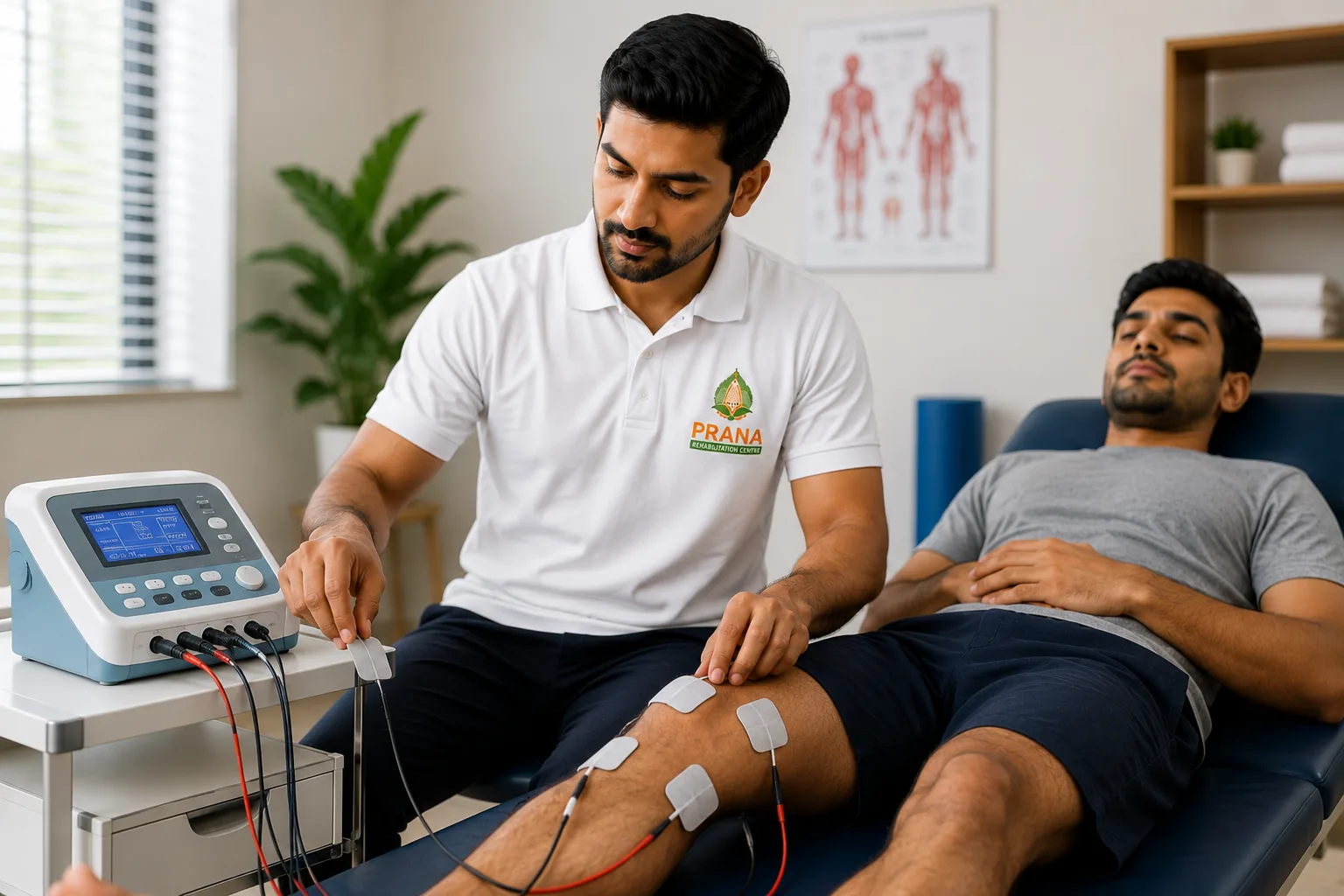
"Relief in every pulse."
Pain is one of the most common reasons patients seek physiotherapy and rehabilitation care. Among the various electrotherapy techniques used today, Transcutaneous Electrical Nerve Stimulation (TENS) stands out as a safe, non-invasive, and effective method for pain management. At Prana Rehabilitation Centre, TENS is an essential part of individualized rehabilitation programs designed to reduce pain, improve mobility, and enhance overall functional recovery.
What is TENS Therapy?
TENS (Transcutaneous Electrical Nerve Stimulation) is a form of electrotherapy that uses low-voltage electrical impulses delivered through electrodes placed on the skin. These impulses stimulate peripheral nerves, helping to reduce the perception of pain and improve patient comfort. It is widely used in physiotherapy because it is simple, safe, drug-free, and effective for both acute and chronic pain conditions.
TENS Therapy at Prana Rehabilitation Centre
At Prana Rehabilitation Centre, TENS therapy is delivered in a structured and clinically guided environment to ensure maximum effectiveness and patient safety.
Patient Assessment and Positioning
Each treatment session begins with a detailed assessment by a qualified physiotherapist. The therapist identifies the source of pain, evaluates nerve involvement, and checks for any contraindications. The patient is then positioned comfortably — either lying down or sitting, depending on the affected area. Proper positioning helps relax muscles and ensures accurate electrode placement.
Skin Preparation
The treatment area is cleaned and dried to improve electrical conduction. This step reduces resistance and ensures better contact between the skin and electrodes. If needed, excessive hair is trimmed for proper adhesion.
Electrode Placement
Self-adhesive electrodes are placed strategically based on clinical requirements. Common techniques include — proper placement is essential for achieving optimal pain relief.
- Segmental placement (spinal levels related to pain)
- Localized placement (directly over the pain site)
- Nerve pathway placement (along affected nerves)
- Trigger point placement (motor or pain points)
Treatment Parameters and Device Setup
Once electrodes are placed, the TENS unit is activated and carefully adjusted by the physiotherapist:
IntensityIncreased gradually until a strong but comfortable tingling sensation is felt
FrequencyLow frequency (1–10 Hz) for endorphin release
High frequency (50–150 Hz) for immediate pain relief
Pulse WidthAdjusted according to patient sensitivity
DurationTypically 15–30 minutes per session
Continuous monitoring ensures the patient remains comfortable throughout the treatment.
Benefits of TENS Therapy
TENS offers several important benefits in rehabilitation:
Reduces acute and chronic pain
Improves joint mobility by reducing stiffness
Enhances participation in physiotherapy exercises
Reduces dependency on pain medications
Improves daily functional activities
Supports recovery in nerve-related conditions
How TENS Works
TENS relieves pain through two main mechanisms:
Mechanism 1
Gate Control Theory
Electrical impulses activate sensory nerve fibers that "close the gate" in the spinal cord, preventing pain signals from reaching the brain. This reduces the sensation of pain.
Mechanism 2
Endorphin Release
Low-frequency stimulation encourages the body to release natural painkillers called endorphins, providing longer-lasting pain relief.
Conditions Treated with TENS at Prana Rehabilitation Centre
TENS is used for a wide range of conditions, including:
Neck, back, shoulder, and knee pain
Post-surgical pain management
Arthritis and fibromyalgia
Sciatica and neuropathic pain conditions
Carpal tunnel syndrome and radiculopathy
Sports injuries and soft tissue trauma
At Prana Rehabilitation Centre, it is delivered with expert supervision, personalized treatment planning, and advanced clinical protocols to ensure the best possible outcomes. Patient safety is a top priority.
TENS is avoided or carefully used in certain conditions
- Patients with pacemakers or cardiac devices
- Over broken or infected skin
- Over the front of the neck or carotid area
- In patients with reduced sensation (with caution)
- During pregnancy over abdominal or pelvic regions
TENS therapy is a valuable and effective tool in modern physiotherapy, offering safe and non-invasive pain relief.
"Stop pain. Start living."