"Gentle waves. Powerful relief."
Pain, stiffness, and soft tissue injuries are common problems seen in physiotherapy practice. One of the most effective and widely used electrotherapy modalities for managing these conditions is Therapeutic Ultrasound. It is a non-invasive treatment that uses high-frequency sound waves to promote healing, reduce pain, and improve movement. In modern rehabilitation, ultrasound therapy plays an important role in accelerating recovery of musculoskeletal conditions.
What is Therapeutic Ultrasound?
Therapeutic ultrasound is a physiotherapy treatment that uses high-frequency sound waves to deliver mechanical energy into the body's tissues. This energy penetrates deep into muscles, tendons, ligaments, and joints, stimulating cellular activity and promoting the natural healing process.
It is commonly used in rehabilitation settings to treat pain, inflammation, and tissue injuries in a safe and controlled manner.
How Does Ultrasound Therapy Work?
Ultrasound therapy works through two main physiological effects:
Effect 1
Thermal Effects
The sound waves generate deep heat within tissues, which helps to:
- Increase blood circulation
- Relax tight muscles
- Reduce stiffness in joints and soft tissues
- Improve tissue elasticity
Effect 2
Non-Thermal Effects
These effects occur due to mechanical vibration at the cellular level and include:
- Micro-massage of tissues
- Reduced inflammation
- Enhanced cellular repair
- Faster healing of damaged structures
Together, these effects make ultrasound therapy highly effective for both acute and chronic conditions.
Benefits of Ultrasound Therapy
Ultrasound therapy offers several important advantages in rehabilitation:
Pain Relief
Helps reduce pain in muscles and joints by improving blood flow and relaxing tissues.
Faster Healing
Sound waves stimulate tissue repair, speeding up healing of sprains, strains, and ligament damage.
Reduces Inflammation
Helps decrease swelling and inflammation in soft tissues.
Improves Blood Circulation
Gentle heat increases blood flow, bringing oxygen and nutrients to injured areas.
Breaks Down Scar Tissue
Useful in treating old injuries by softening scar tissue and improving movement.
Increases Flexibility and Mobility
Helps loosen stiff joints and tight muscles, improving range of motion.
Non-Invasive Treatment
No surgery or injections needed — it's a simple, safe external therapy.
Helps with Chronic Conditions
Often used for conditions like tendonitis, bursitis, and muscle spasms.
Common Uses in Physiotherapy
Ultrasound therapy is widely used for a variety of conditions, including:
Musculoskeletal Injuries
Sprains, strains, tendonitis, and bursitis
Post-Surgical Rehabilitation
Helps reduce scar tissue formation and supports tissue healing
Chronic Conditions
Osteoarthritis, frozen shoulder, and chronic back pain
Sports Injuries
Promotes faster recovery of muscles and tendons
Ultrasound Therapy in Rehabilitation Practice
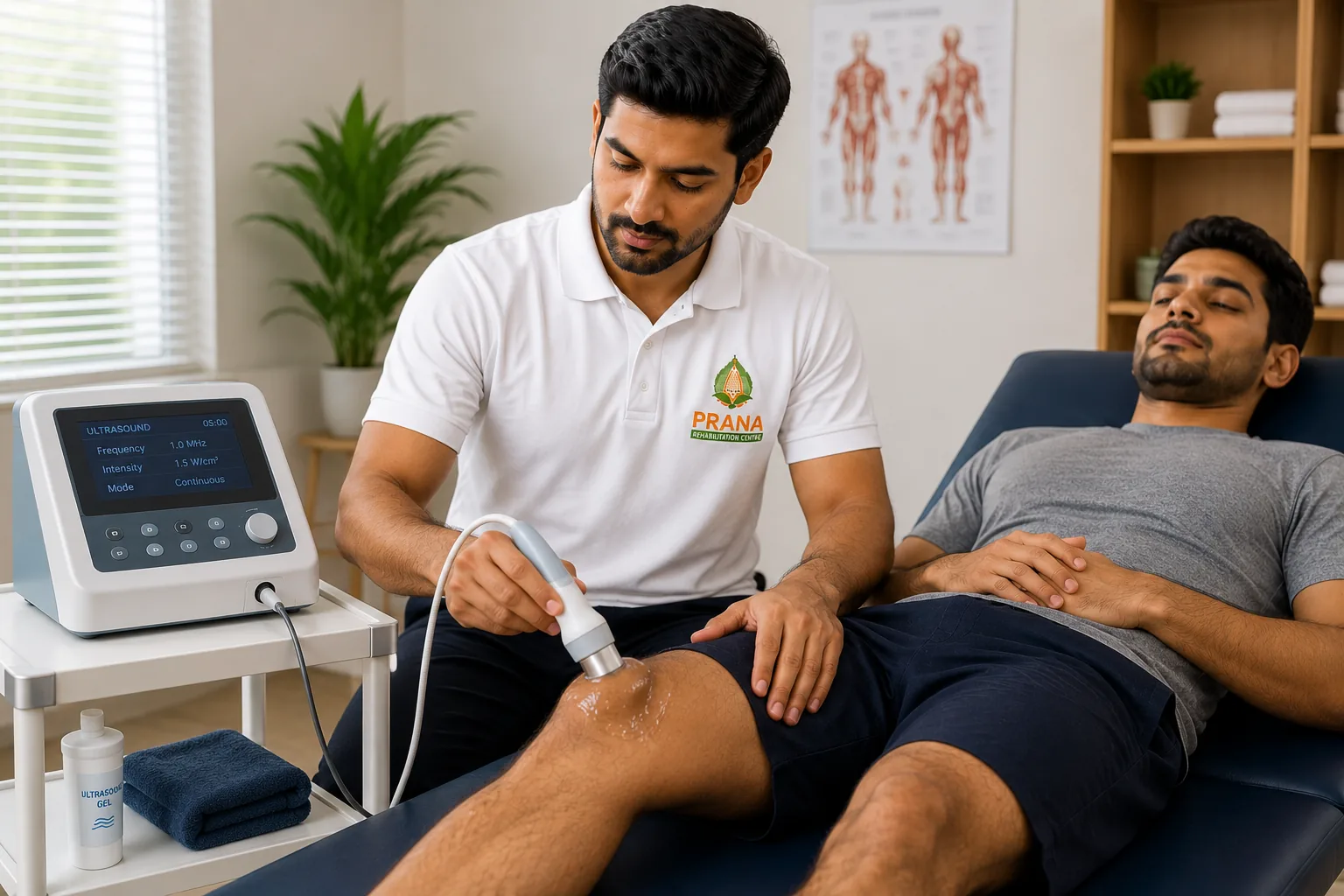
In rehabilitation centres, ultrasound is applied using a handheld probe with a coupling gel to ensure proper transmission of sound waves into the tissues. The physiotherapist carefully selects treatment intensity, frequency, and duration based on the patient's condition. The treatment is usually performed over the affected area in slow, circular movements to ensure even energy distribution and effective therapeutic results.
Ultrasound therapy is a valuable and scientifically proven modality in modern physiotherapy. By combining thermal and non-thermal effects, it helps reduce pain, improve circulation, and accelerate tissue healing. In rehabilitation settings, it plays a key role in restoring function and mobility, making it an essential part of treatment for musculoskeletal injuries, post-surgical recovery, and chronic pain conditions.
"Deep tissue healing for faster recovery."